
Industries · Manufacturing
Manufacturing analytics that the shop floor actually uses.
Power BI and data analytics for UK manufacturers, from single site operations to multi plant groups. OEE, downtime, scrap, plan attainment and cost, joined up across MES, ERP and quality systems.
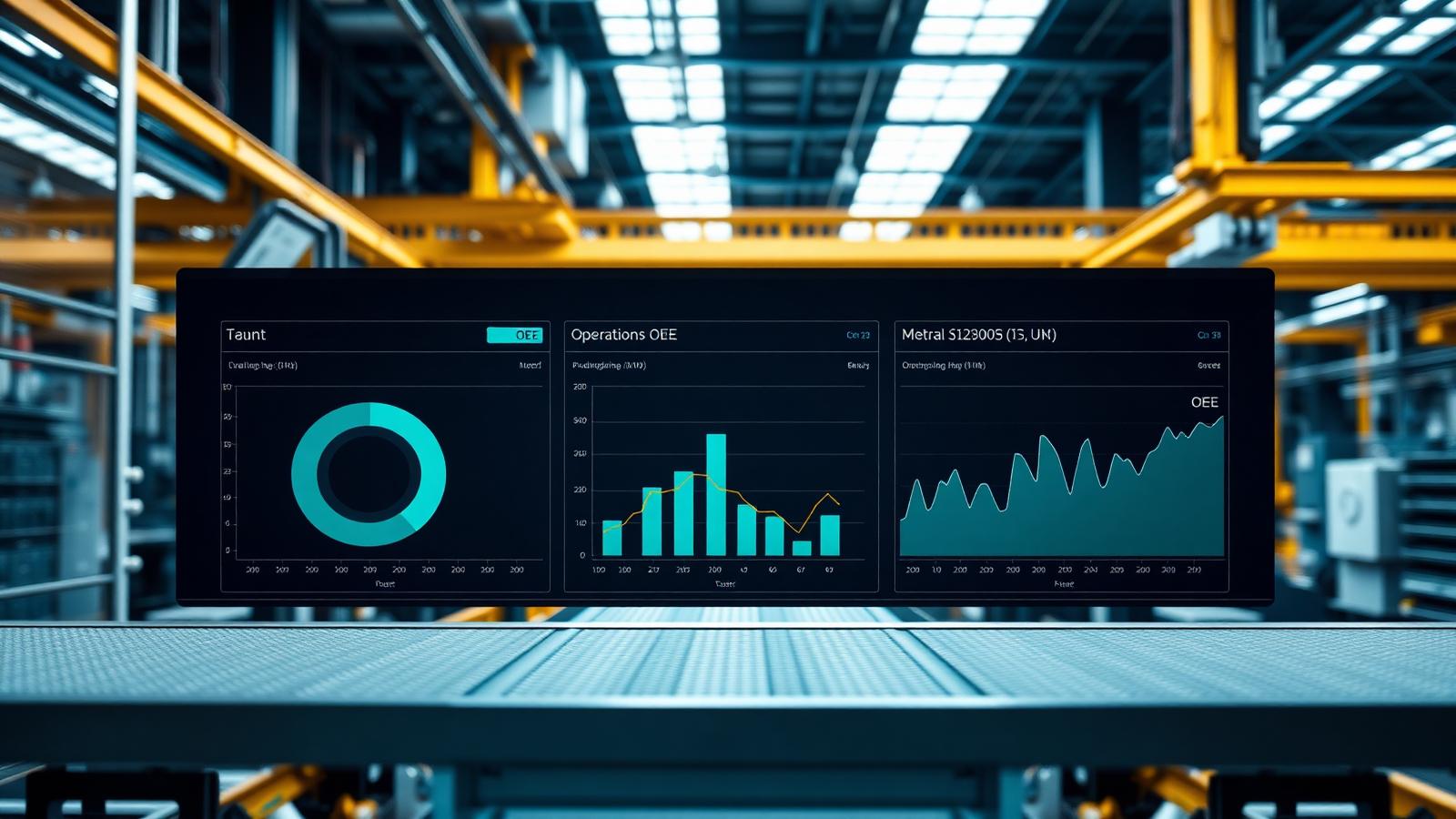
Manufacturing is one of the sectors where analytics has the clearest return, and one of the sectors where it is most often done badly. Most UK manufacturers we meet already have data — an MES logging events, an ERP running the production plan, a quality system somewhere in the middle — but the pieces do not talk to each other. The result is a set of dashboards that each tell a different version of the same story.
The metrics that matter
Manufacturing analytics has a well established core. OEE gives you the headline efficiency. Underneath it, availability, performance and quality tell you where the losses are. Plan attainment tells you whether you are shipping what sales promised. Scrap and rework tell you what it is costing you when things go wrong. Downtime, categorised by cause, tells you where to spend engineering time next month.
A good manufacturing dashboard resists the temptation to show all of these on one page. Shift teams want the current shift. Plant leadership want the last week trended. Group leadership want the last twelve months and the outlook. Same platform, same metrics, three different pages.
Where the data usually sits
For most UK manufacturers the picture is similar. Production events sit in an MES or a bespoke SCADA layer. The plan sits in an ERP such as Sage 200, Business Central, SAP or IFS. Quality events sit in a QMS. Costs sit in finance. Bringing these together in a warehouse — Fabric, Synapse or a lakehouse depending on your stack — is the foundation. Everything else builds on top of it.
How we work with manufacturers
Our starting point is almost always a single production line or a single plant, not a group wide rollout. Build the model, land the data, ship a shift level dashboard that the team on the floor is willing to open. From there, extend upward through plant, region and group. The alternative — a two year transformation programme — tends to run out of momentum before it delivers anything usable.
We work alongside operations directors, continuous improvement teams and site IT. We are comfortable in a factory, we understand what a shift handover looks like, and we do not build dashboards that only make sense from an office.
Related reading
If your remit spans the wider supply chain, our supply chain analytics guide covers the shape of an end to end platform. For the finance side of manufacturing, our North West manufacturer case study walks through a real management accounts rebuild.